Introduction
Abstract
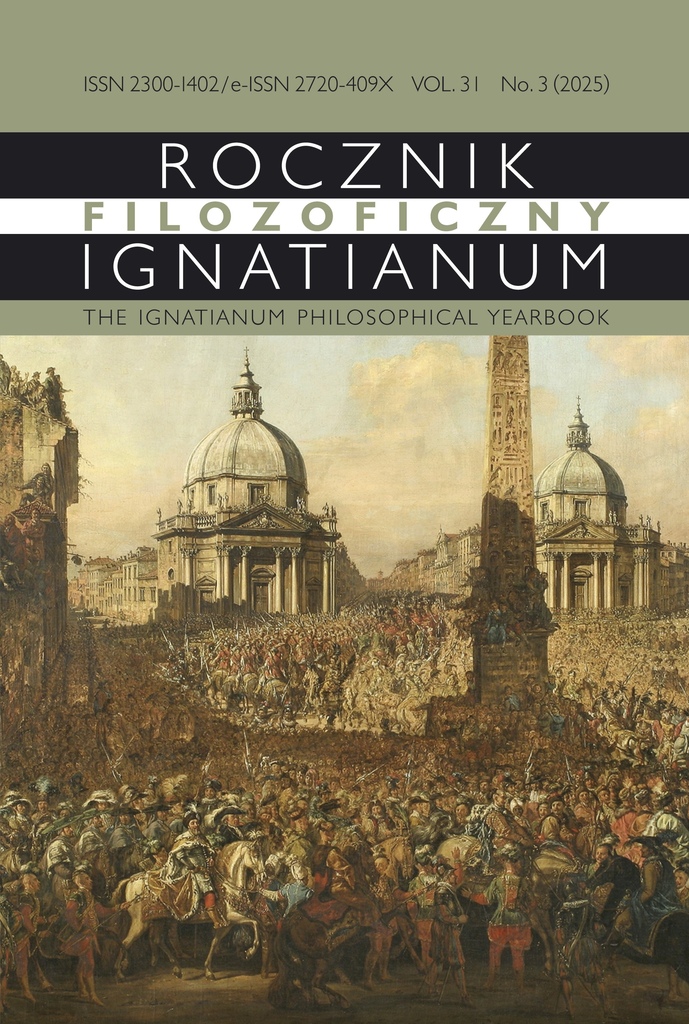
We are pleased to present this new issue of the Ignatianum Philo- sophical Yearbook, largely devoted to diplomacy in the early modern period. The focus is directed both to professional diplomats in the ser- vice of European states—ambassadors, envoys extraordinary, residents, and legate secretaries—and to informal emissaries of rulers and mem- bers of their information networks. The articles gathered in this volume highlight the role of the diplomatic “actor” or adopt comparative and prosopographical perspectives.
Copyright (c) 2025 Ignatianum University in Cracow

This work is licensed under a Creative Commons Attribution-NoDerivatives 4.0 International License.
The Yearbook only accepts materials for publication that are free of all conflicts of interest, and that in no way involve conflicts over authorship, copyright, etc. The Editors will take action against any cases of plagiarizing, ghostwriting1, guest/honorary authorship2, etc. Where co-authored work is concerned, the Author listed first is expected to take responsibility for the submission, and is required to make clear the contributions of all of the Co-Authors involved. In the event of the publication owing its existence to funding dedicated to this purpose, this fact should be made clear: e.g. in any note of thanks/acknowledgement, or in a footnote, etc. Explicit notification should be given of any form of reprinting, with the appropriate evidence of permission to publish being furnished as required. Any impropriety on the part of Authors/Reviewers risks exposing them to appropriate responses from the relevant institutions.
______
1 This term refers to instances of a person who has made an essential contribution being omitted from the list of authors, or from notes conveying gratitude and/or acknowledgement.
2 This occurs when a person who has made either an insignificant contribution or no contribution at all nevertheless appears on the list of authors.